Summer 2020
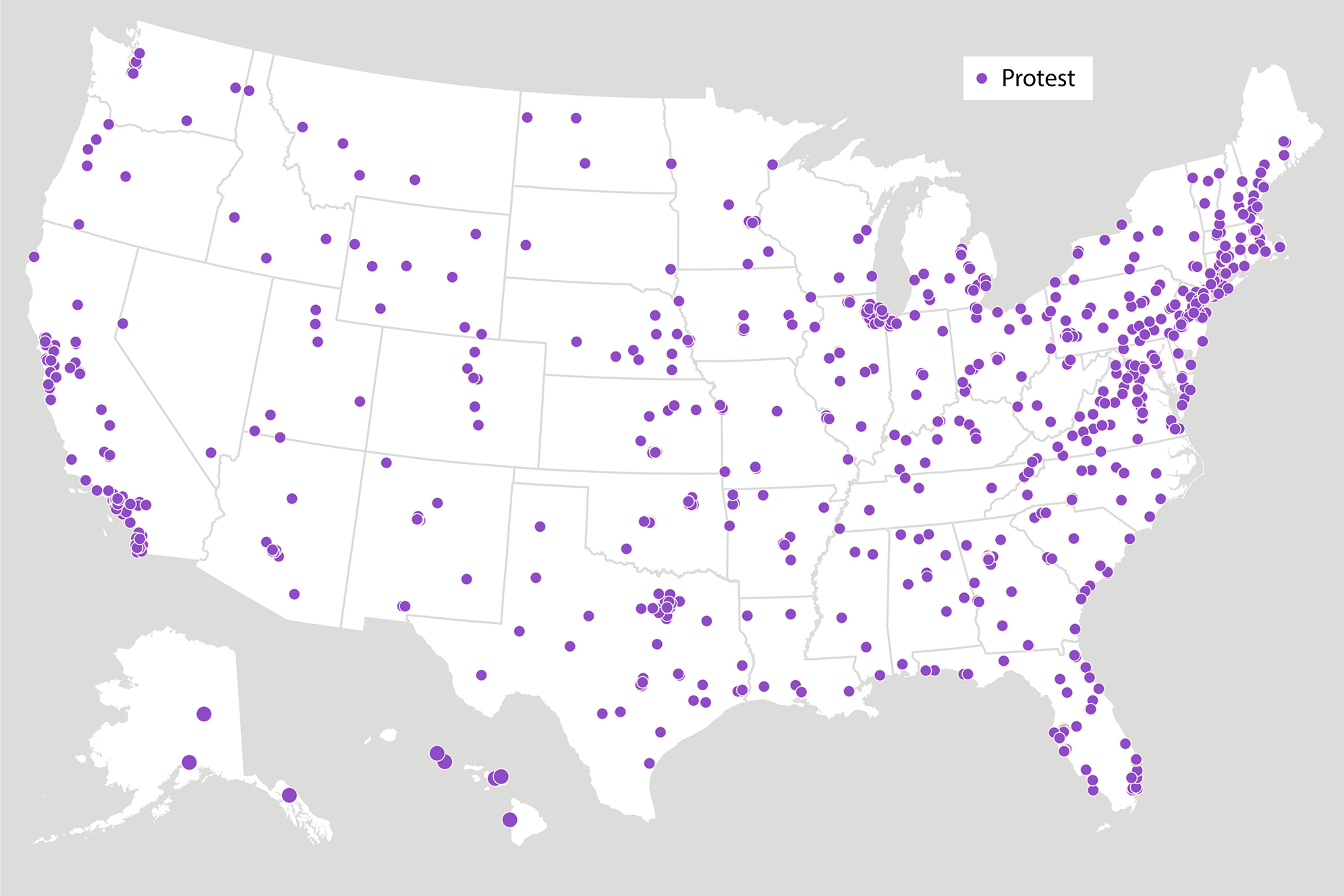
The Summer of 2020 saw one of the most significant political movements of the past several decades. Ignited by the murder of George Floyd, public outrage against police brutality and systemic racism hit levels not seen since the 60’s. The moment demanded a response from institutions, including, and perhaps especially, a company like HMH. As an education company we knew that could not come in the form of a blog post or blanket statement, but in an actual curriculum for students and teachers who were trying to make sense of everything that was happening in real time.
Quick, Impactful, Respectful
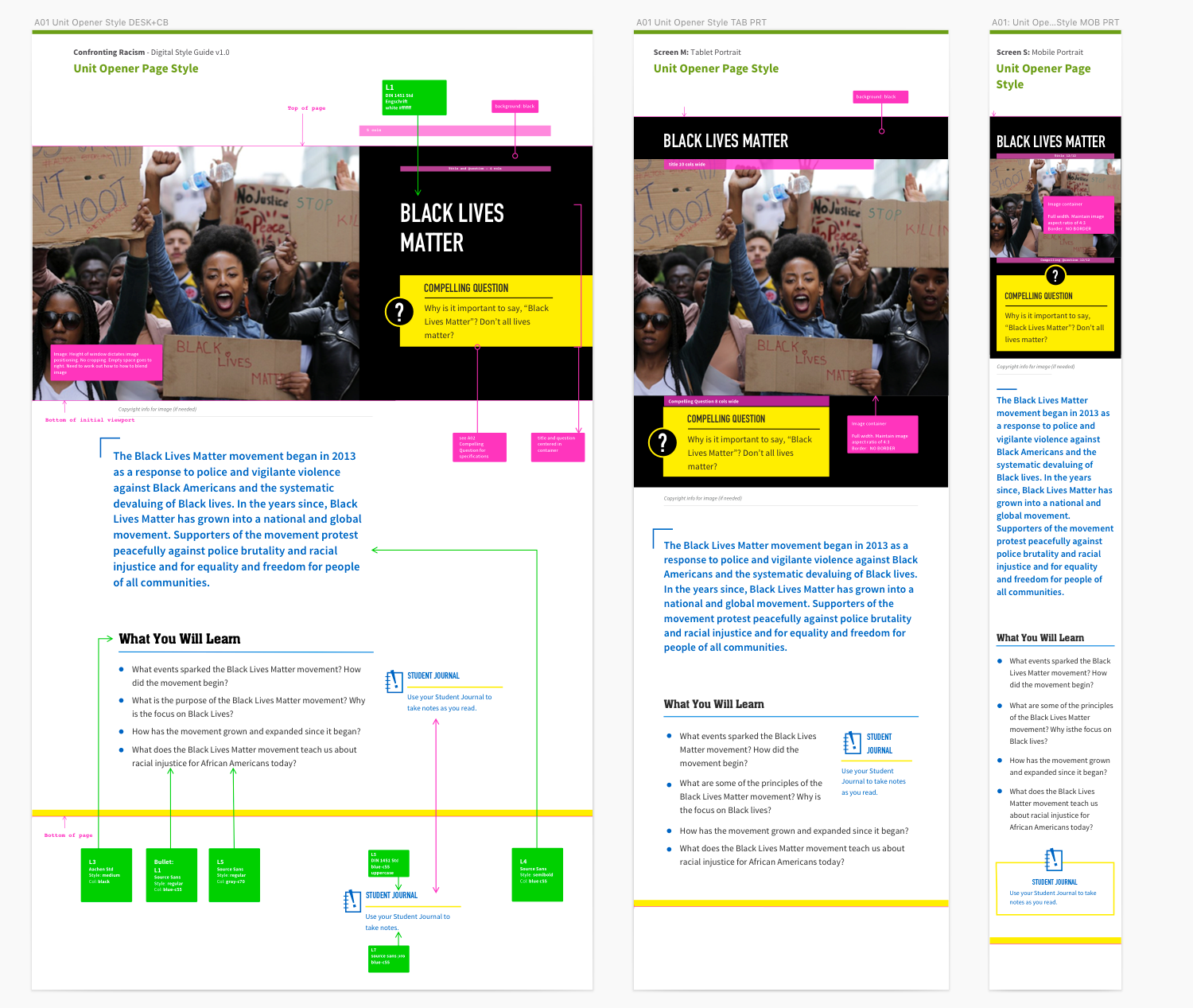
Although HMH had always had a robust social studies program, it lacked anything that meaningfully addressed race and inequality throughout American history. With this new project the constraints were as real and fast moving as the news itself. As a result, editorial decisions that would have normally gone through months of review needed to happen in weeks, even days. Our approach was to work within what already existed rather than build from scratch. The modules were built on established design patterns from our existing product library, which I adapted to meet the specific visual and tonal requirements of the subject matter. That decision freed the team to focus almost entirely on content quality and editorial integrity rather than burning weeks on new component development.
The speed and severity of content also required a different kind of collaboration. We worked closely with Dr. Tyrone Howard, an educator, researcher, and founder of UCLA's Black Male Institute, as a curricular and cultural advisor throughout the process. This partnership helped shape editorial decisions, kept the tone grounded, and gave the team the confidence that the work was being done responsibly.
Understanding and Reflection
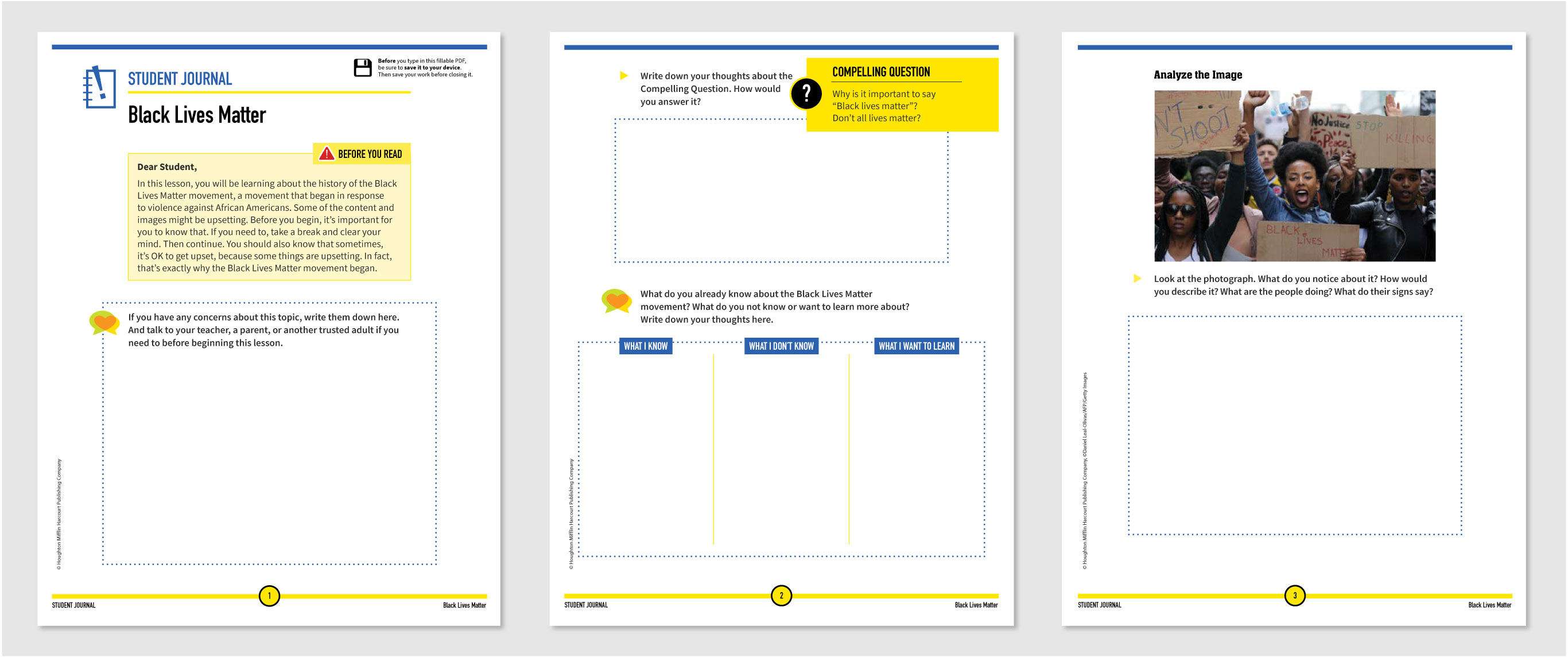
One of the clearest design decisions we made was to build in structured space for reflection: this experience shouldn’t just expose students to difficult material, it should also help them process it. To address this we provided them writing prompts, discussion starters, and space for personal response, all to help them make sense of this complicated moment and all that lead up to it. We also included a note to parents explaining the program's purpose and framing. For a curriculum tackling America's history of racial violence in a polarized moment, the parent-facing communication was as much a design problem as the student-facing content and getting the tone right required as much care and concern as anything else in the project.
Visually, the project took deliberate cues from the aesthetics of the BLM movement itself – bold typography, strong contrast, contemporary and unambiguous language – in order to ground the program in the way those who were leading it chose to represent it. The design was meant to signal that this wasn’t a sanitized institutional offering, but a sincere response to the present moment and a long overdue correction in our educational content.
The Legacy of (Confronting) Racism
Due to its very nature, Confronting Racism launched to a divided reception. Some educators embraced it immediately, other's pushed back, and the political headwinds since have made any anti-racism education difficult to offer widely (to put things mildly). I include this project in my portfolio not because it was a commercial success, but because of what it represents about how I think design work can matter beyond percentages and dollar amounts. I was proud as to what we were able to accomplish. I was proud we sought expertise we didn’t have and we made something that wasn’t afraid to make a statement. It was, perhaps sadly, a bold offering for an education company and I am proud to have worked on it.
