Chocolate Covered Broccoli
There’s a concept in edtech sometimes called “chocolate covered broccoli” that suggests that if you wrap rigorous educational content in enough “sugar” then kids won’t notice that they’re actually learning. It sounds appealing on paper but study after study shows that it seldom actually works. Done poorly, extrinsic motivators like animations, points, and reward moments produce short-term engagement spikes and long-term diminishing returns, and once the novelty of the bells and whistles wear off you’re left with a noisier interface and the same underlying engagement problem.
The real lever for student engagement is content that feels relevant, personal, and gripping, but the truth of the matter is that word problems, no matter how well written, struggle to live up to that standard. We could work with our editors to uplift our content and increase our engagement scores, but we needed to figure out a way to support that content visually in a way that was equally meaningful and earned.
Where, How, and How Much
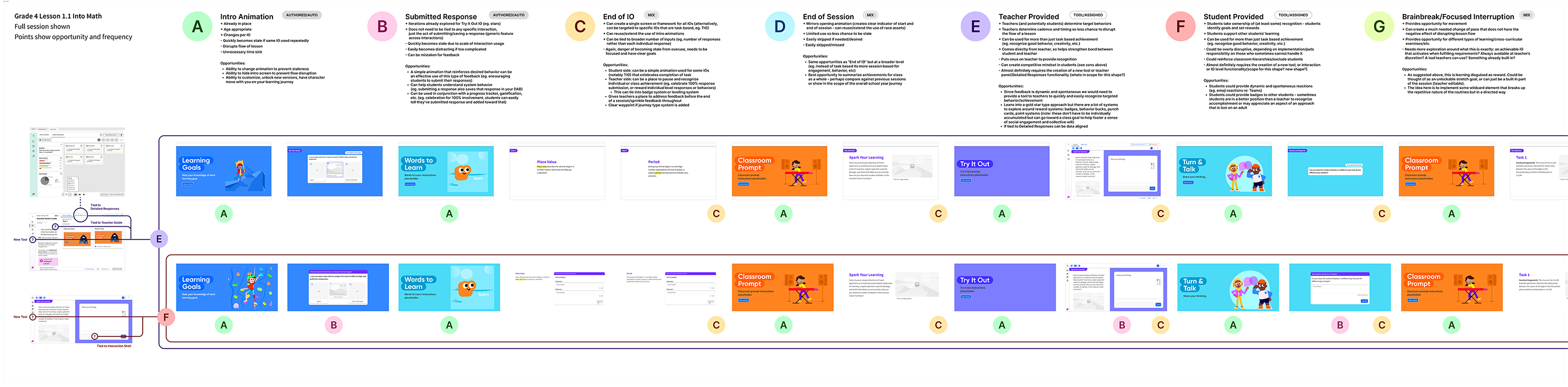
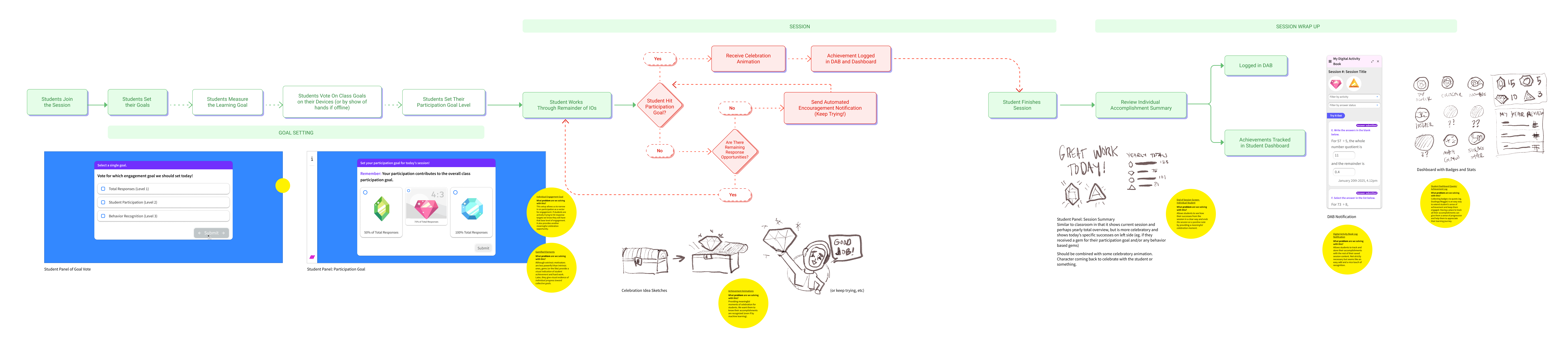
These became the most relevant questions in identifying our mechanism(s) for engagement: where in the process of learning did it make the most sense to interrupt the flow, how would we choose to trigger and recognize moments of celebration, and at what interval would we implement these new feature elements? To do so, we mapped the full student, teacher and whole-class journey across the entire platform to identify where potential celebration moments could feel earned rather than arbitrary. This highlighted opportunity zones for us to consider, such as completing a multi-stepped problem (several times per session), finishing a session itself (once per session), reaching a unit milestone (across several sessions), and even compared individual achievement versus collective achievement in the classroom. Each had different stakes, slightly different audiences, and different implications for how much control teachers would need in managing them.
Hands-On or Hands-Off
That last point, teacher management, was a significant one. We didn’t want to introduce a new feature only to add increased burden on a teacher’s workload. From a motivational standpoint, achievement recognition lands hardest when the goal was set by the person being recognized, eg. students who choose their own targets feel more ownership over reaching them. But identifying that goal and putting the goal-setting responsibility on teachers meant adding cognitive overhead to people who were already managing thirty students, a curriculum timeline, and a platform they were still learning.
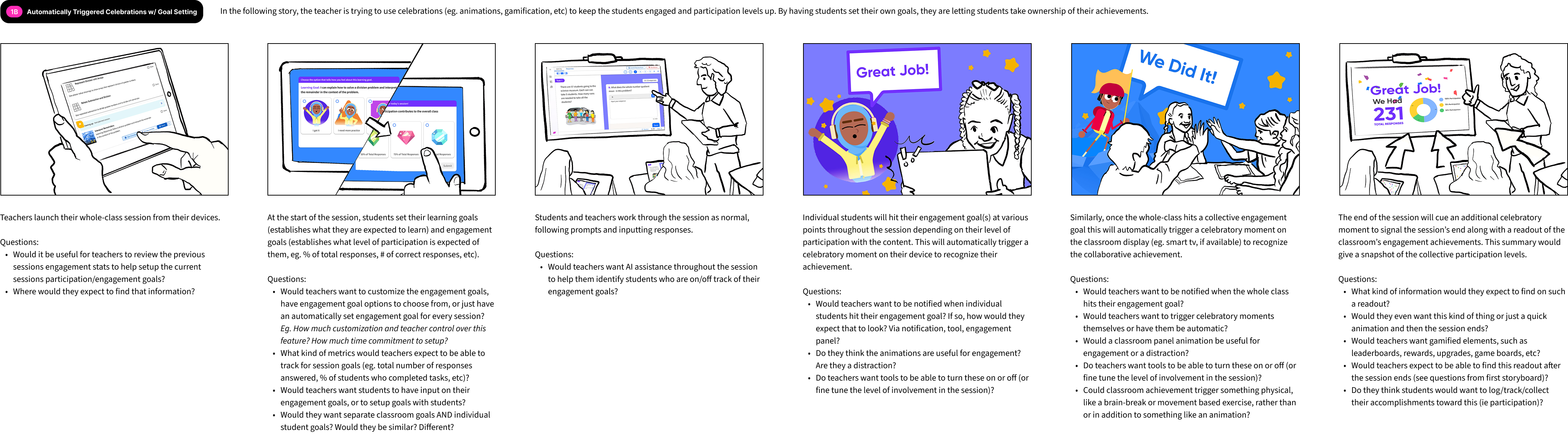
We wanted real feedback to get an idea of what teachers actually wanted when it came to engaging their students, so we presented them with several storyboards we developed to illustrate various celebration models. These touched on those big questions of where, how and how much: who initiates things, when it triggers, what it looks like for the student, and how much the teacher needs to do to make it all happen.
Celebrating the Narrative
The storyboard feedback was clear on two things. First, most teachers wanted the system to handle celebration automatically rather than providing them with yet another decision to make in the middle of a lesson. Second, and more importantly, every user responded more positively to celebration moments that felt connected to what they were actually learning, rather than generic reward animations that could have come from any app.
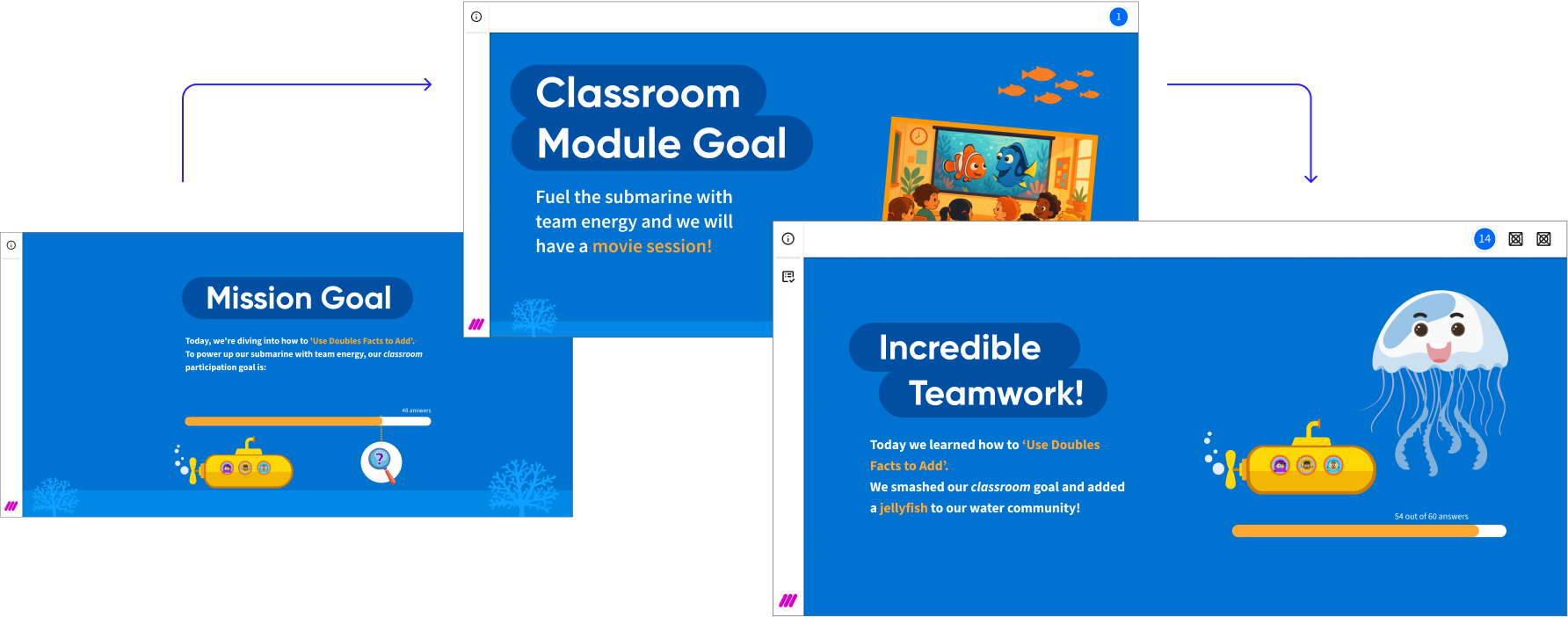
That second point was tricky. Aligning engagement to specific content would be almost impossible across our many different product offerings, but perhaps there was a way to tie a thread we could control more easily throughout the content that we could use as a scaffold to mount our celebrations onto? This pointed us toward a narrative engagement approach that would create a visual story that the whole class experienced together, with celebratory moments tied to collective milestones within that narrative arc. Completing a session advanced the story. Reaching a unit milestone unlocked a new chapter. And so on. The celebration wouldn’t be a gold star appended on willy-nilly, rather it was part of the world the content was building. Students would then need to engage with the content in order to find out what happens next.
Feedback and Next Steps
Initial prototypes of the narrative features were such a big hit with students and teachers that we were quick to implement them into our Classcraft sessions. Early feedback showed a roughly 20% increase in user satisfaction, enough of an early indicator that we’re in the process of developing new narrative concepts and ways to expand controls and features further across the platform, not just the sessions themselves.